EN · FISHKEEPING
Clean Your Sump Without Crashing Your Cycle: One Chamber at a Time
A dirty sump chokes flow, but a full deep clean can strip the bacteria your tank depends on. The sump's separate chambers make the safe routine obvious: clean one chamber per session, and let the rest carry the cycle.
Published: October 29, 2026
Updated: October 29, 2026
4 min read
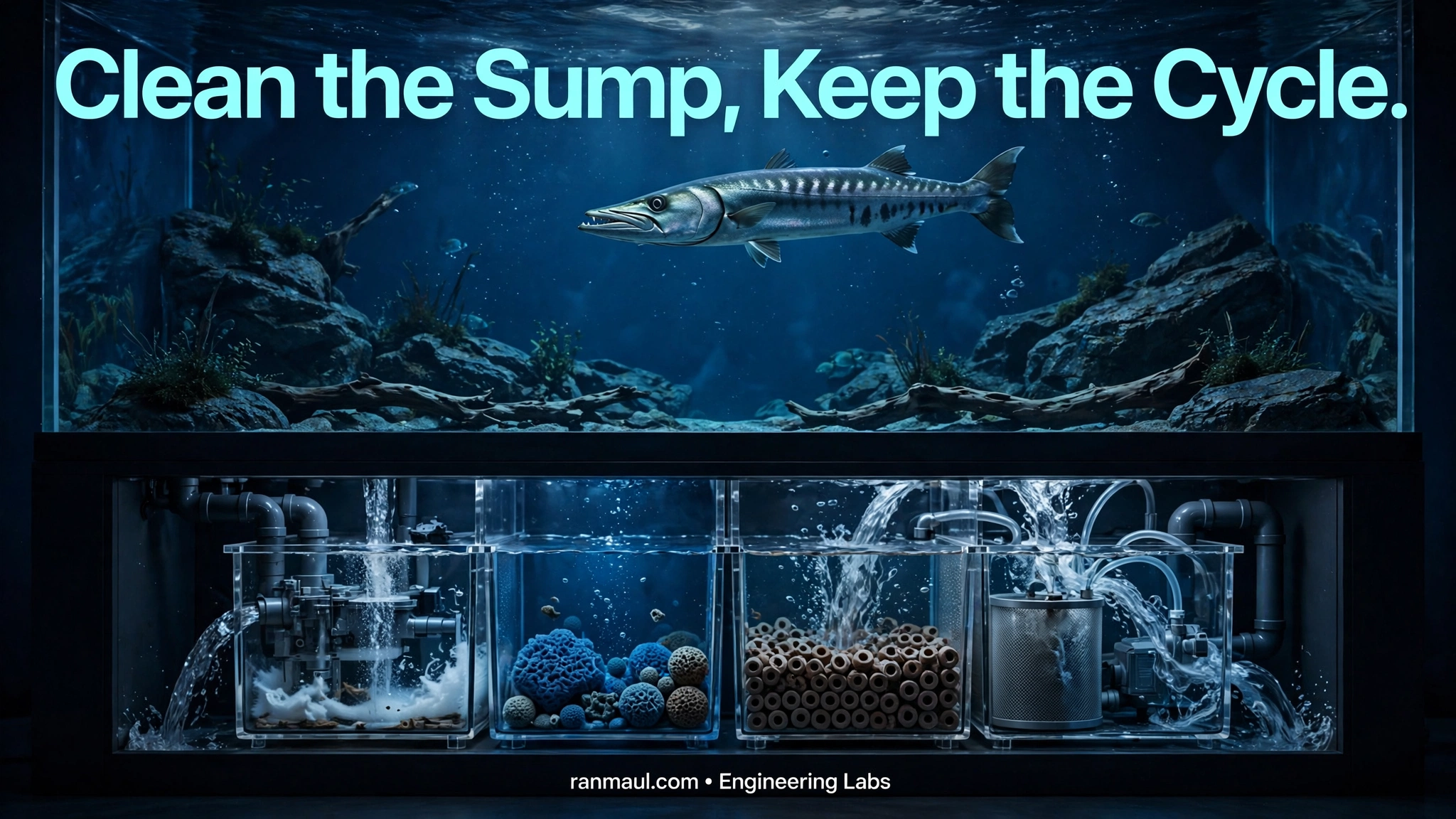
Every sump owner knows the two fears. Leave the sump alone and flow slowly chokes on sludge. Clean the whole thing at once and the tank can mini-cycle, with ammonia climbing days later. Both fears are reasonable. Only one of them has a routine that removes it, and it comes from the sump's own design: separate chambers.
Clean one chamber per session. The rest of the sump keeps the cycle alive while that chamber recovers.
#The goal: remove sludge, keep biofilm
The goal of filter cleaning is simple: remove the sludge that restricts flow without removing the living biofilm your tank depends on. Biofilm is not dirt. It is the bacteria doing the nitrogen cycle, and it lives on every surface in the sump, thickest on the bio media.
That distinction decides everything else. Mechanical media exists to catch debris, so it can be squeezed hard and replaced often. Bio media exists to host bacteria, so it gets a gentle swish at most, and it is never scrubbed until it looks new. Bio media usually works better seasoned than brand new.
#Three rules that do not bend
First, rinse in removed tank water, never straight tap water. Do filter maintenance on water change day: drain a bucket of tank water first, and that bucket is your rinse station. Chlorine and chloramine in tap water, plus temperature shock, kill bacteria fast. Tap water is fine for plastic housings, lids, intake tubes, and impellers — just keep your main bio media out of that stream.
Second, never replace all media at once. Replace one pad or one sponge per session, and let the new piece get colonized before the next one goes. The same applies to bio media: if a piece must go, replace part of it, never the whole chamber.
Third, never use soap or household cleaners on filter parts. If something needs more than a rinse and a brush, soak it in dechlorinated water and scrub, then rinse again. And keep media wet and back in oxygenated, flowing water quickly. Work one chamber at a time so no media sits out drying while you clean the rest.
#The routine, chamber by chamber
Mechanical chamber, most often and most firmly. Squeeze sponges in the bucket of tank water until the water runs mostly clear — three to five good squeezes is usually enough. You are not trying to make them look new. Replace filter floss or poly pads when squeezing no longer restores flow; floss is cheap and is the one media type you should replace regularly.
Bio chamber, rarely and gently. Ceramic rings, bio balls, or similar media just need a gentle swish in tank water to dislodge surface debris. Never scrub them. If the chamber holds several bags or trays, clean one bag or tray per session, not the whole chamber.
Pump and return chamber, on its own schedule. Every few months, take the impeller out, rinse it under running water, and check for hair, debris, or wear. Sand substrates wear impellers faster, so inspect the impeller surface and keep a spare if it is no longer smooth.
#A four-week rotation for a typical sump
Week 1: mechanical chamber — squeeze sponges, replace floss if it is matted. Week 2: first bio chamber or first bio bag — gentle swish only. Week 3: pump chamber — impeller rinse and inspection, plus any chemical media that is due for replacement. Week 4: second bio chamber or second bio bag — gentle swish only.
Then the rotation repeats. No week touches more than one bacterial home at a time, and every chamber gets attention within the month. Heavy-bioload tanks, predator tanks included, clog the mechanical chamber faster — shorten the mechanical interval, never the bio interval. Clean the mechanical side more often; leave the bio side alone longer.
#Signs you went too far
If ammonia or nitrite spikes, water clouds, or fish breathe fast in the days after a clean, you removed too much at once. The response is not another clean. Test water more often for the following week, change water with dechlorinated, temperature-matched water if ammonia climbs, and let the remaining bacteria repopulate. If the tank was already stressed — new fish, disease treatment, recent ammonia readings — keep that session's maintenance light. Stability beats perfection.
#Conclusion
A sump does not need to be cleaned all at once, and it should not be. Its chambers are already the schedule: one per session, mechanical firm, bio gentle, everything rinsed in tank water. The tank never notices a chamber being cleaned. It only notices when all of them are cleaned at once.